
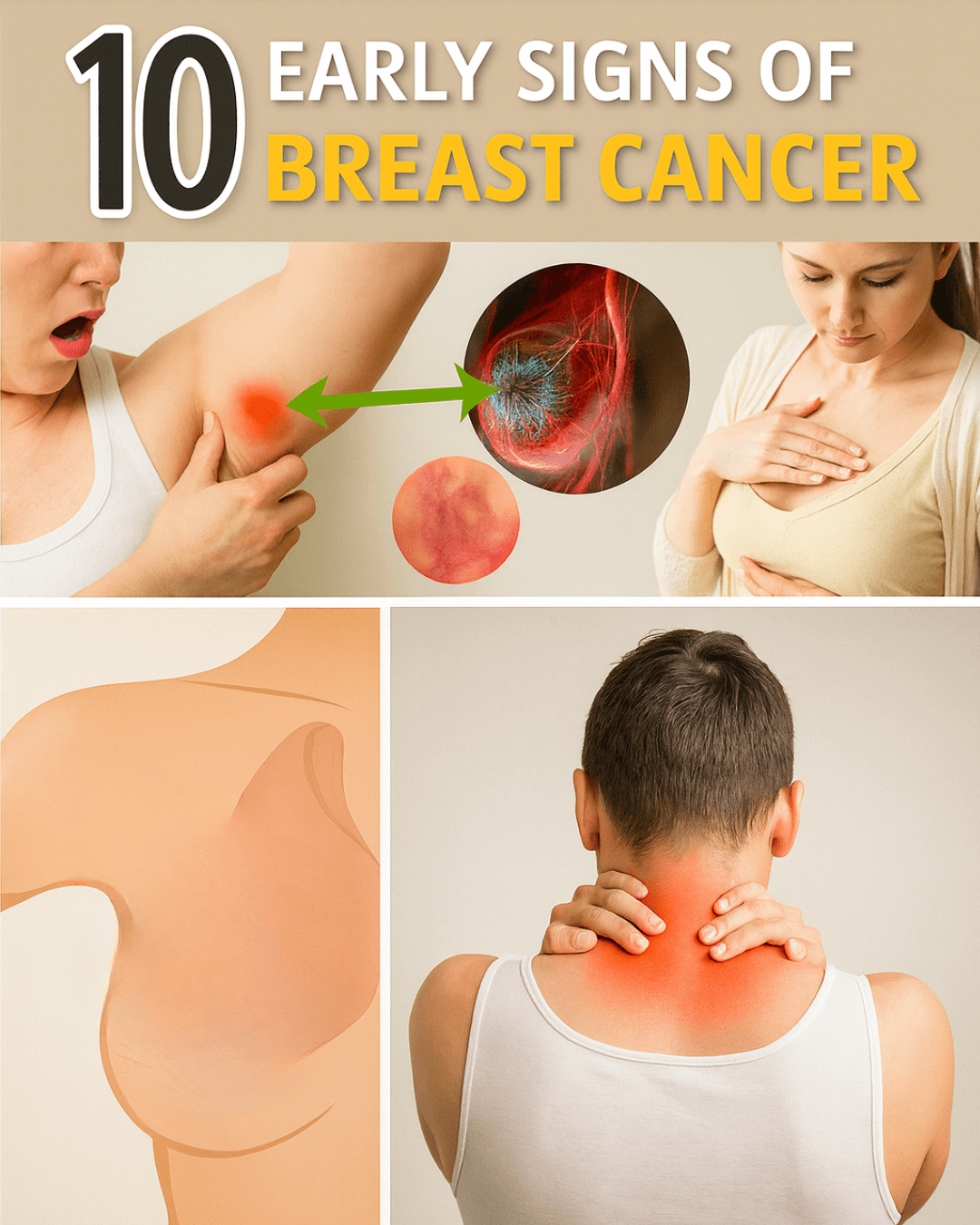
5. Persistent Pain in One Area
While breast cancer is often painless in early stages, some women experience localized pain that doesn’t go away.
If you have aching or discomfort in one specific spot that lasts more than a few weeks, take note.
Pain related to the menstrual cycle usually affects both breasts and comes and goes—this is different.
6. Swelling in the Armpit or Collarbone Area
Lymph nodes in the underarm or above the collarbone can swell before you even feel a lump in the breast.
This swelling might feel like a firm knot or fullness in those areas.
It’s easy to dismiss as a minor infection, but persistence matters.
7. Visible Veins Becoming More Prominent
Suddenly noticing more visible veins on one breast compared to the other can sometimes signal increased blood flow related to tumor growth.
This sign is less common but has been noted in medical literature as something to watch for.
8. Itchy or Scaly Skin Around the Nipple
Persistent itching, scaling, or crusting around the nipple or areola—especially if it affects only one side—could indicate a rare form called Paget’s disease of the breast.
Many women mistake this for eczema or a skin infection, delaying important checks.
9. Constant Fatigue or Unexplained Weight Loss
While not specific to breast cancer, ongoing fatigue combined with other signs can sometimes be linked.
Unintentional weight loss without diet or exercise changes is another general warning sign of many cancers, including breast cancer.
10. Back, Shoulder, or Neck Discomfort That Won’t Go Away
Some women experience persistent pain between the shoulder blades or in the upper back before other symptoms appear.
This can happen when cancer spreads to nearby lymph nodes or tissues.
It’s often mistaken for muscle strain, which is why awareness is key.
Simple Steps You Can Take Right Now
Here’s a practical monthly routine you can start today:
- Perform breast self-examination 7–10 days after your period starts (or choose a fixed day each month if postmenopausal).
- Stand in front of a mirror with arms at sides, then raised, looking for visible changes.
- Lie down and use the pads of your fingers to feel each breast in circular motions, covering the entire area up to the collarbone and armpit.
- Check both sitting/standing in the shower—slippery skin makes lumps easier to feel.
- Report any new or persistent changes to your healthcare provider promptly.
Regular clinical breast exams and mammograms as recommended by your doctor remain essential tools.
