
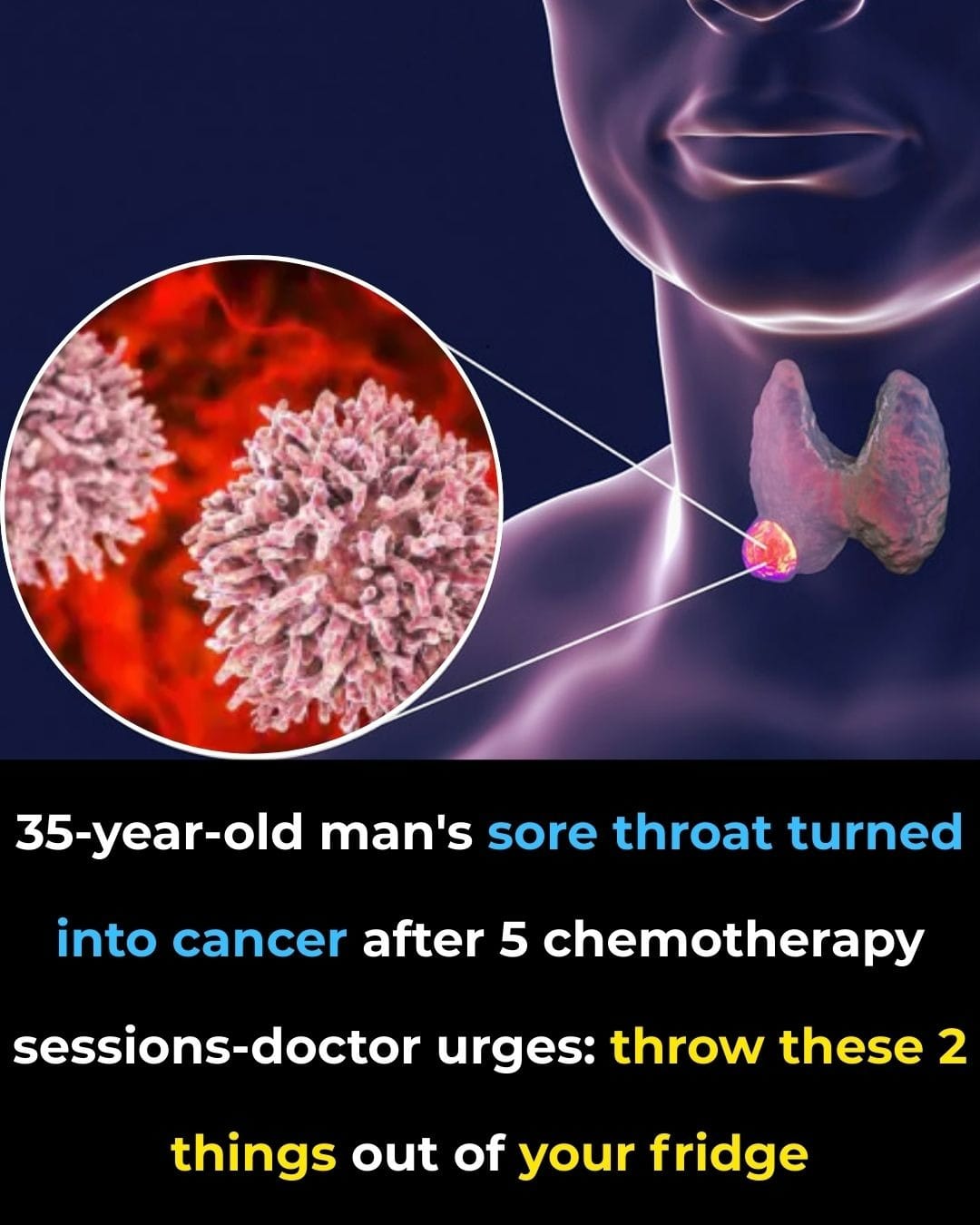
A sore throat is one of the most common reasons people visit a doctor — especially during cold and flu season.
But what if your sore throat just… doesn’t go away?
For most, it’s a viral infection, allergies, or acid reflux.
But in rare cases, a persistent sore throat can be a warning sign of something more serious — including oropharyngeal cancer, a type of head and neck cancer that’s been rising in younger adults.
Let’s explore what could be behind a long-lasting sore throat — so you can recognize red flags and act wisely.
Because real health isn’t about fear.
It’s about knowing when to pay attention — and when to seek answers.Buy vitamins and supplements
What Causes a Sore Throat?
Most sore throats are harmless and short-lived:
 Viral infections (common cold, flu, mono)
Bacterial infections (strep throat)
Allergies or dry air
Acid reflux (GERD)
Overuse of voice
These usually resolve within 7–10 days.
 When a Sore Throat Might Be Something More Serious
If any of these symptoms last more than 2–3 weeks, see a healthcare provider:
Persistent sore throat
Could indicate chronic infection or tumor growth
Lump in the neck
Swollen lymph node from infection — or cancer
Difficulty swallowing
Pain or sensation of blockage
Hoarseness lasting >2 weeks
Vocal cord involvement
Unexplained weight loss
Systemic illness, including cancer
Ear pain (one-sided)
Referred pain from throat tumors
Early detection improves outcomes dramatically.
The Hidden Link: HPV and Throat Cancer
One major cause of rising throat cancer in younger adults is human papillomavirus (HPV) — specifically HPV-
